[sgmb id=”1″]In 1945, a group of texts dating from the second and third centuries AD was found at a place called Nag Hammadi in Egypt. These texts were writings that have been ascribed to a group of people called Gnostics. A great deal has been made of these texts in the popular media as being the discovery of heretofore unknown information that may have been coexistent, if not predating, the canonical gospels;1 however, the reality is “the ancient polemics contained a surprising amount of authentic literature from the heretics themselves, and these materials have been widely known for centuries.”2 Ancient heresiologists like Irenaeus, Tertullian, Hippolytus, Epiphanius, and Eusebius “were quoting their enemies’ opinions quite fully and accurately”3 over a millennium before the Nag Hammadi discoveries.
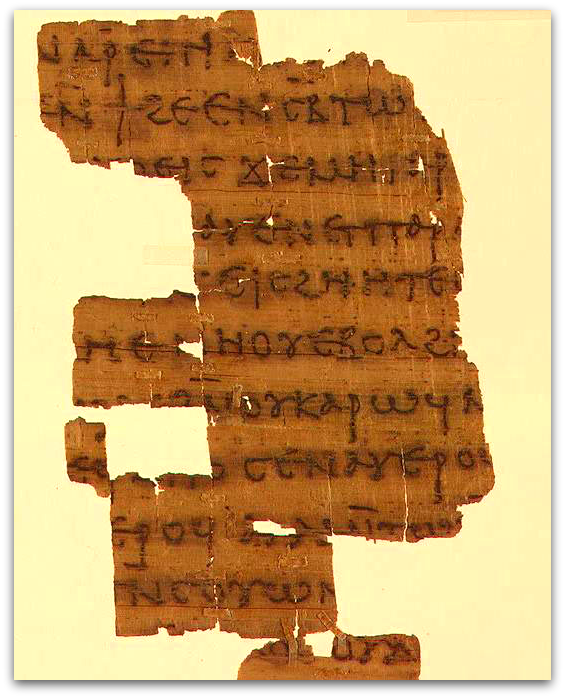
While these discoveries are provenanced as being from what are termed Gnostic sources of the second to fourth centuries, a single definition of Gnosticism has eluded the scholarly community.4 In recent years, the term has been assigned to Irenaeus (c. 180 AD),5 however, both Irenaeus[6] and Tertullian[7] attributed it to Paul’s writings (1 Timothy 6:20; 1:4). Yet, Lenski points out, “The supposition that Paul refers to the Gnostics and thus to Marcion’s ‘antitheses’ conflicts with the time of the composition of this epistle unless this letter is regarded as a late forgery.”8 This presents a conundrum. Shall we believe Irenaeus and Tertullian who were very early and capable writers and who were certainly nearer the time of both Paul and Marcion; or shall we be accept Lenski’s seemingly logical conclusion that the church fathers were wrong, and no Gnosticism was present in Paul’s day if we are going to accept an early date for Paul’s epistle? This conundrum may not be as insurmountable as Lenski makes it. Is it possible that what Lenski defines as the Gnosticism of Marcion is a reference to Marcion’s fully developed system which rejected the Old Testament in its entirety, while Irenaeus and Tertullian were referring to elements found in Paul’s day, which we shall delineate as gnosis, referring to more basic component elements not yet developed which was the foundation for the Gnostic heresies that came to full flower in their own day? Klutz notes,
The most important of these distinctions was that between ‘gnosis’, which was defined broadly as élite knowledge of divine mysteries, and ‘gnosticism’, which was defined more specifically as referring to a family of religious systems first attested in the second century CE.
Lenski’s implication…
Emerging Gnosticism in the First Century AD Church
Online links for footnotes:
[6] http://www.ccel.org/ccel/schaff/anf01.ix.ii.i.html (Accessed July 2, 2012)
[7] http://www.ccel.org/ccel/schaff/anf03.v.vi.iii.html (Accessed July 2, 2012)
[14] http://www.earlychristianwritings.com/yonge/book30.html (Accessed June 20, 2012)
[30] http://www.ccel.org/ccel/schaff/anf01.ix.ii.xxvii.html (Accessed July 2, 2012)
[31] http://www.earlychristianwritings.com/text/gospelhebrews-ogg.html (Accessed July 3, 2012)
[33] http://www.earlychristianwritings.com/text/infancyjames-mrjames.html (Accessed June 23, 2012)
[34] http://www.gnosis.org/naghamm/jam2.html (Accessed June 28, 2012)